
Is Your Matcha Powder Really Clean? How to Know It’s Free of Heavy Metals and Pesticides?
With matcha, you drink the powdered tea leaf, not only water steeped with it. That makes the leaf’s contents important, especially when matcha is your daily wellness tea.
Lead can occur in soil and water, and tea plants may absorb it as they grow. Organic farming and a clean-looking region cannot reveal metal levels in finished clean matcha powder. So, how can you judge clean matcha powder?

Emerail says its Ceremonial Grade Matcha Powder is tested by SGS, a third party. The tests check EU standards for excessive pesticides and heavy metals. Still, heavy metal tested matcha needs more than a label.
Ask for the test results and the limits used to judge them. Those numbers reveal more than a purity claim, even for pesticide free green tea powder.
Why Whole-Leaf Consumption Makes Matcha Purity Standards Matter
Brewed green tea leaves are removed after steeping. Matcha is different: whole leaf consumption sends ground leaves into your drink, so matcha purity standards matter.
How heavy metals can enter tea leaves
Tea plants can absorb naturally occurring lead from soil and their growing environment. When leaves become pure matcha green tea powder, substances in them may reach your cup.
Growers often shade tea plants before harvest. They then remove stems and veins before grinding the leaves into a fine powder.

Why appearance and ceremonial grade cannot prove safety
Shading increases chlorophyll and gives ceremonial grade matcha powder its vivid green color. But color, taste, and grade labels do not measure pesticide residues or heavy metals.
A label saying 100% pure matcha describes added ingredients, not contaminant levels. To check those levels, look for independent test results identifying the specific product tested.
Clean Matcha Powder, Heavy Metal Tested Matcha, Pesticide Free Green Tea Powder: What the Claims Mean
Clean matcha powder sounds reassuring, but growing methods and product tests answer different questions. Organic cloud-fed matcha may use restricted farm inputs, but organic status cannot rule out heavy metals from soil.
A naturally weed-controlled crop may avoid some chemical sprays, but no pesticides claims need lab results. Reports should name tested chemicals and reporting limits; results below detection limits do not prove a substance is never present.

Heavy metal tested matcha needs more than a package badge. Reports should list measured metals, amounts found, and comparison limits. A no harmful microorganisms claim needs separate results from the finished powder.
For Emerail’s cloud-fed matcha, product-specific records can support claims about organic certification and weed-control practices. The same care applies to non-gmo sugar-free vegan claims, covering bag ingredients and how the tea was grown.
How to Verify SGS-Tested Matcha Tea and EU Standard Compliant Matcha
Emerail says SGS tests its Ceremonial Grade Matcha Powder against EU standards for heavy metals and excessive pesticides. If you are shopping for SGS tested matcha tea, ask to see the report supporting that claim.
Ask for results covering metals, pesticides, and microorganisms
A report for matcha third-party tested by SGS should name the product or lot and show the test date. Check each substance tested, its result and units, the detection or quantification limit, and the compliance limit.
Ask separately whether the lot was tested for microorganisms. Metal and pesticide results cannot answer that question.
Read the numbers behind “no heavy metals” and “no pesticides”
Claims such as no heavy metals or zero excessive pesticides need context. A “non-detect” result means the lab found no substance above its stated method limit. It does not mean the amount is absolutely zero.
At Emerail, we adhere to the strict regulations set by the EU Standards for Foodstuffs. Our comprehensive testing confirms zero excessive heavy metals or harmful microorganisms, ensuring your everyday cup is as clean as it is smooth.
Understand what compliance confirms
For EU standard compliant matcha, check which limits the lab applied to the tested sample. Passing an applicable limit shows that sample met it. It does not establish results for every lot or possible contaminant.
What High-Altitude Matcha Sourcing Can—Tell You
Sourced from an untouched plateau at 5,240 feet, Emerail’s High-Altitude Matcha benefits from pure mountain water, mineral-rich soil, and exceptionally clean air. To complement this pristine growing environment, every batch undergoes third-party SGS testing to verify that no excessive pesticides or heavy metals contaminate the finished tea.
Pair growing conditions with independent verification
For high-altitude matcha, the key question is what the finished powder contains. Emerail says third-party SGS testing checks for excessive pesticides and heavy metals under EU standards.
A test report can show the measured levels behind that claim. That is why Emerail combines this pristine high-altitude terroir with verifiable third-party lab testing, bridging natural purity with strict scientific standards.
A Practical Checklist Before You Buy Clean Matcha Online
Before you buy clean matcha online, check Emerail Ceremonial Grade Matcha Powder’s ingredients. The label should list only matcha, with no added sweeteners, colors, or fillers.
Ask for current SGS test results linked to the product or lot you plan to buy. Check measured levels and reporting limits for lead, cadmium, arsenic, mercury, and pesticide residues. Ask whether separate results cover microorganisms.
Check which EU requirements the report addresses, and request proof for any pure mountain water or organic claims. A bright color or ceremonial label cannot replace test results. Tests for one product cannot prove another product or an untested lot is clean.
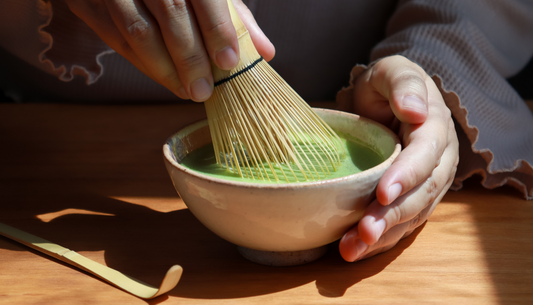
When you choose Emerail Ceremonial Grade Matcha Powder, you get full batch transparency and uncompromised quality. Whisk it with warm water or blend it into your favorite latte for a clean, silky daily ritual.
FAQ
Why does whole-leaf consumption matter when choosing matcha?
With brewed green tea, you remove the leaves after steeping. With matcha, you drink the ground leaves. Therefore, check test results for the finished powder.
Can the color or ceremonial grade of matcha prove it is clean?
No. Shading before harvest can make matcha vivid green. However, color, taste, and ceremonial grade cannot measure pesticides or heavy metals. Lab results offer better evidence than appearance.
Is Emerail Ceremonial Grade Matcha Powder tested for pesticides and heavy metals?
Emerail states that SGS independently tests its matcha against EU standards for excessive pesticides and heavy metals. Ask for a current report tied to the product or lot, including measured results and assessment limits.
What should a heavy metal tested matcha report show?
Look for results for lead, cadmium, arsenic, and mercury, with units, test dates, reporting limits, and applicable thresholds. A “non-detect” means a substance was not found above the test method’s stated limit. It does not mean the level is absolutely zero.
Does a pesticide free green tea powder claim mean no pesticides can be present?
Not necessarily. The claim needs a clear list of tested pesticides and the lab’s reporting limits. A result below a detection limit does not prove the substance could never be present.
Does SGS testing for pesticides and metals also rule out harmful microorganisms?
No. A “no harmful microorganisms” claim requires separate microbiological results. Ask whether those tests covered the matcha product or lot you plan to buy.
Does Emerail’s high-altitude, cloud-fed origin prove purity?
Emerail’s Cloud-Fed Matcha is grown on an untouched plateau at 5,240 feet, far removed from urban pollution and industrial runoff. Combined with rigorous third-party SGS testing for every batch, Emerail provides double assurance of natural purity and safety from farm to cup.
Do cloud-fed growing conditions mean Emerail’s matcha is organic, non-GMO, or naturally weed-controlled?
While cloud-fed growing conditions provide a pristine natural environment, claims like organic, non-GMO, and pesticide-free rely on specific farming practices and batch certifications. Emerail backs its natural cultivation with full ingredient transparency and SGS testing to verify clean standards.
What should I check before buying clean matcha online?
Read the ingredient statement for additives and request current SGS results for the product or lot. Check which EU requirements apply, and ask for separate support for any organic, water-source, sugar-free, or vegan claims. If the sourcing and results meet your needs, enjoy the matcha with water or milk.